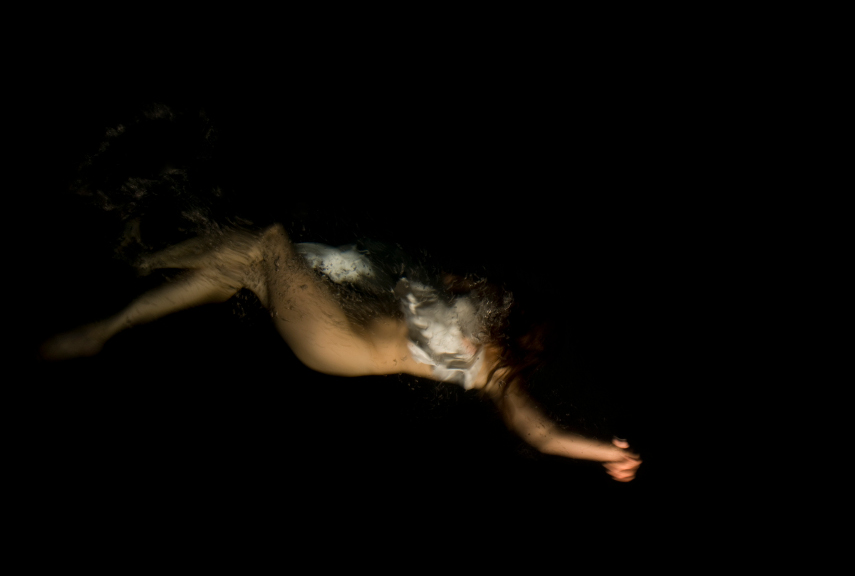

The term chiaroscuro stems from the Italian words chiaro (“clear” or “bright”) and oscuro (“obscure” or “dark”), and refers to the arrangement of light and shade in a work of art. Renaissance master Leonardo da Vinci is said to have invented chiaroscuro, discovering that he could portray depth through slow gradations of light and shadow. A century later, the Italian Baroque painter Caravaggio spearheaded a new method of chiaroscuro, using a single light source—such as a lit candle or an open window—to dramatically brighten his figures against a dark background. This emphasis on tonal contrast quickly spread across Europe, with followers of the style named “the Caravaggisti.” Still today, artists like Donato Giancola and Gülin Hayat Topdemir work in a “Caravaggesque” style, evoking the aesthetic of the European Old Masters through intense contrasts of light and dark.
— Read on www.artsy.net/gene/chiaroscuro . This is taken from the Italian fir light and dark and was originally work on coloured paper with tones of light in gouache and graded tones of black in ink. The theory is that shades of white on a black background become more three dimensional. This brings a new level of meaning to my I understanding of why paintings like Rembrant’s nightwatchmen ( single candle source) and peter and Paul disputing ( areas of light tonal shades)are so appealing. The artsy article explains that Rembrandt ‘ sacrificed detail’ but gained striking realism through the dramatic 3D effect.
https://www.widewalls.ch/chiaroscuro/- shows how this is done in modern work.
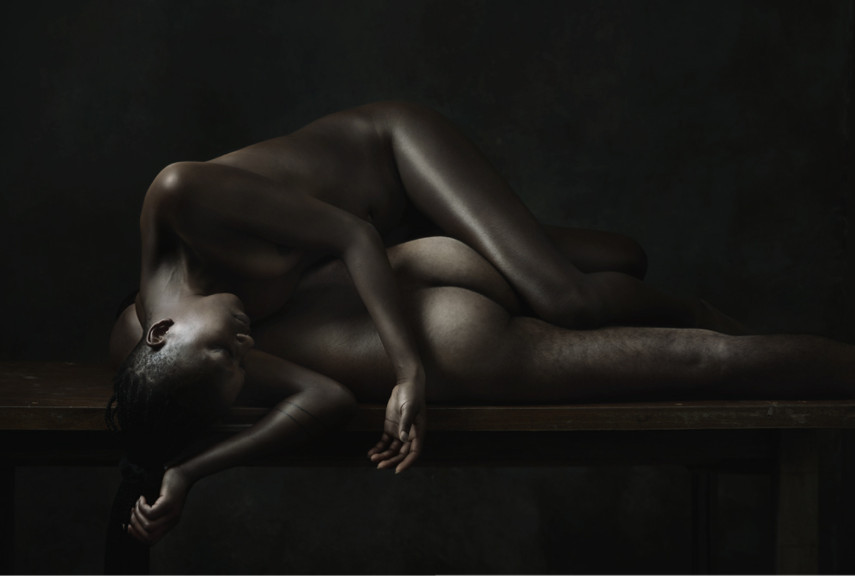
 painting1